



Power factor is a crucial electrical parameter that significantly impacts the performance and efficiency of electrical systems. When it comes to a 6.6kV diesel genset, understanding its power factor characteristics is essential for both suppliers and end - users. As a 6.6kV diesel genset supplier, I am well - versed in these characteristics and their implications.
Understanding Power Factor
Power factor (PF) is defined as the ratio of real power (P) to apparent power (S) in an electrical circuit. Real power is the power that actually does useful work, such as running motors or lighting up bulbs. Apparent power is the product of the voltage and current in the circuit. Mathematically, PF = P/S.
A power factor of 1 (or 100%) indicates that all the electrical power supplied to the load is being used effectively. However, in most real - world electrical systems, the power factor is less than 1. This is because many electrical loads, such as motors and transformers, have inductive or capacitive elements that cause the current to lag or lead the voltage.
Power Factor Characteristics of a 6.6kV Diesel Genset
1. Load - Dependent Power Factor
The power factor of a 6.6kV diesel genset is highly load - dependent. At low loads, the power factor is typically low. This is because the genset has to supply a certain amount of reactive power to maintain the magnetic fields in the generator windings and other components, even when the real power demand is low. As the load on the genset increases, the power factor generally improves.
For example, when a 6.6kV diesel genset is operating at 20% of its rated load, the power factor might be around 0.5. As the load increases to 80% of the rated load, the power factor can improve to around 0.8 - 0.9. This is because the proportion of real power in the total power consumption increases as the load grows.

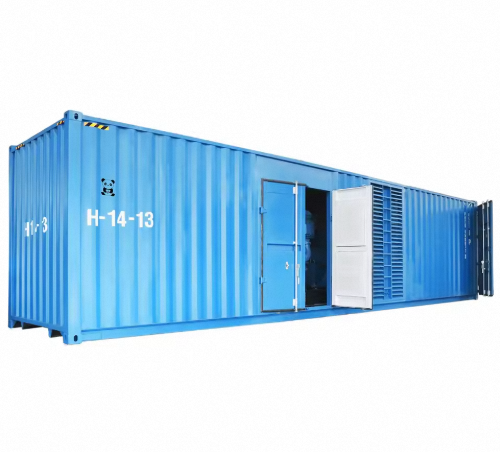
2. Impact of Load Type
The type of load connected to the 6.6kV diesel genset also has a significant impact on the power factor. Inductive loads, such as motors, consume reactive power and cause the current to lag behind the voltage. This results in a lower power factor. Capacitive loads, on the other hand, cause the current to lead the voltage.
In a mining operation, for instance, there are often large inductive loads like conveyor belts and crushers. When these loads are connected to a 6.6kV diesel genset, the power factor can be quite low. To address this issue, power factor correction equipment can be installed. This equipment, usually in the form of capacitors, can supply the necessary reactive power and improve the power factor of the system. You can learn more about Mining Diesel Generator on our website.
3. Generator Design and Power Factor
The design of the 6.6kV diesel genset itself can also influence the power factor. High - quality generators are designed to operate with a relatively high power factor over a wide range of loads. The winding design, the type of insulation, and the magnetic core materials all play a role in determining the power factor characteristics of the genset.
Some modern 6.6kV diesel gensets are equipped with advanced control systems that can adjust the excitation of the generator to optimize the power factor. These systems can sense the load and the power factor in real - time and make appropriate adjustments to ensure efficient operation.
Importance of Power Factor in a 6.6kV Diesel Genset
1. Efficiency
A high power factor means that the genset is using the electrical power more efficiently. When the power factor is low, the genset has to supply more current to deliver the same amount of real power. This results in higher losses in the generator windings and other components, reducing the overall efficiency of the genset.
For example, if a 6.6kV diesel genset has a power factor of 0.5, it has to supply twice as much current as it would if the power factor were 1 to deliver the same real power. This increased current leads to higher resistive losses (I²R losses) in the generator, which in turn reduces the efficiency and increases the fuel consumption of the genset.
2. Capacity Utilization
Power factor also affects the capacity utilization of the 6.6kV diesel genset. A low power factor means that the genset is not being used to its full potential. For instance, if a genset has a rated capacity of 1000 kVA and the power factor is 0.5, the real power that can be delivered is only 500 kW. By improving the power factor to 0.9, the genset can deliver 900 kW of real power, effectively increasing its capacity utilization.
3. Voltage Regulation
A low power factor can cause voltage drops in the electrical system. When the current is high due to a low power factor, the voltage drop across the transmission lines and other components increases. This can lead to unstable voltage levels at the load end, which can affect the performance of electrical equipment. By improving the power factor, the voltage regulation of the system can be improved, ensuring stable operation of the connected loads.
Power Factor Correction for 6.6kV Diesel Gensets
1. Capacitor Banks
One of the most common methods of power factor correction for 6.6kV diesel gensets is the use of capacitor banks. Capacitor banks are connected in parallel with the load. They supply reactive power to the system, which compensates for the reactive power consumed by inductive loads. This reduces the overall reactive power demand from the genset, improving the power factor.
The size and configuration of the capacitor bank depend on the type and size of the load. For large industrial loads, multiple capacitor banks may be required to achieve the desired power factor improvement.
2. Advanced Control Systems
As mentioned earlier, some modern 6.6kV diesel gensets are equipped with advanced control systems for power factor correction. These systems can continuously monitor the power factor and adjust the excitation of the generator or the operation of the capacitor banks to maintain a high power factor.
Conclusion
Understanding the power factor characteristics of a 6.6kV diesel genset is crucial for optimizing its performance and efficiency. As a 6.6kV diesel genset supplier, we are committed to providing our customers with gensets that have excellent power factor characteristics. We also offer solutions for power factor correction to ensure that our customers can make the most of their gensets.
If you are in the market for a 11kV Diesel Generator or a High Voltage Diesel Generator, or if you have any questions about the power factor characteristics of our 6.6kV diesel gensets, please feel free to contact us for further discussion and procurement.
References
- Electric Power Systems: Analysis and Design by J. Duncan Glover, Mulukutla S. Sarma, and Thomas J. Overbye.
- Power System Analysis and Design by John J. Grainger and William D. Stevenson.
- Handbook of Electrical Engineering by Terry L. Floyd.