

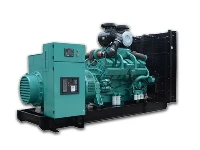

When I started running my diesel generator supply business three years ago, I thought “innovation” just meant putting new parts on old machines and calling it a day. Spoiler: I couldn’t have been more wrong. The clients—small-town café owners, rural farm operators, even family homeowners who can’t rely on spotty grid power—don’t want a fancy box that just turns on when the lights go out. They need something that works when they need it, fits their space, doesn’t eat through fuel, and won’t break the bank when they have to fix it. That’s where innovation for diesel generator suppliers actually lives: not in tech for tech’s sake, but in solving real, messy, day-to-day problems that my customers face.
Let me break this down like I talk to my team every Monday, no corporate fluff. First off, innovation here isn’t just about making generators more powerful—it’s about making them smarter to use. Early on, we sold a lot of big, loud units that homeowners hated because they couldn’t run them overnight without waking up the whole street. So we started tweaking our designs to cut noise without losing power. Now, many of our units have sound-dampening enclosures that keep decibels under 65 at full load—about as loud as a normal conversation—something we didn’t offer three years ago. That’s not just a small change; it’s the kind of thing that turns someone from a one-time buyer into a repeat client. We also added basic app connectivity to most of our mid-range units. You can check fuel levels, start or stop the generator remotely, and get alerts if something’s off before it becomes a big problem. Last month, a client texted me saying his generator gave him a low-oil alert while he was out of town. He logged into his phone, turned it off, and scheduled a service appointment without having to rush home. That’s innovation that matters, not just specs on a website.
Another big part of our innovation is adapting to what different customers actually need. A few months back, a small farm client told me their old generator was too big for their small barn and used way too much fuel when they only needed to run their milking machines and lights a few hours a day. I went back to our design team and we worked on making units with variable speed engines, so they only use as much fuel as they need, not a fixed amount no matter the load. That unit is now one of our best-sellers for small rural operations. We also noticed that a lot of homeowners were confused about which size generator they actually needed. One client bought a too-big unit because he thought bigger was better, and it cost him $200 more in fuel every month than he needed to spend. So we started offering free, no-pressure consultations to help clients figure out the right size for their home or business. We even put a guide on our site that asks a few simple questions—how many appliances you need to run, if you have central AC, how often power goes out—to point you to the right unit. That’s not flashy, but it’s innovation in how we serve customers, and it’s cut down on returns by almost 30% this year.
I know a lot of people think diesel generators are outdated now that solar and portable gas units are around. But diesel has real advantages—they run longer on a tank, need less maintenance over time, and work way better in extreme cold or heat than most gas units. The problem is, for years, diesel generators were seen as clunky, only for big factories or construction sites. Our job as suppliers is to change that, and that means innovating to fit into homes and small businesses, not just big industrial sites. For example, we worked on smaller, more compact units that fit into a standard garage space, not a separate concrete pad in the backyard. That’s why we’ve had such good success with our line of residential diesel generators—stuff like the Honda Diesel Generator For Home and Kirloskar Diesel Generator For Home Use. These units are designed to sit next to your furnace or water heater, not off in a corner, and they come with easy-to-use control panels so you don’t need a technician to figure them out. I still get texts from clients who tell me they never thought a diesel generator could be quiet enough to run in the same space as their TV—proof that we’re moving the needle on what people expect from these units.
Cost is another huge area where innovation matters a lot. Customers always ask for better prices, but cutting corners on quality isn’t innovation—it’s a bad idea that comes back to bite everyone. Instead, we looked at our supply chain to find ways to keep costs down without sacrificing parts or reliability. We work with local service technicians instead of only sending parts from overseas, which cuts down on repair wait times and makes repairs cheaper for our clients. We also started offering flexible payment plans, because not everyone can drop $5,000 on a generator all at once. Last year, we launched a rent-to-own program for residential units, and that alone got us 40 new clients who couldn’t have afforded to buy upfront. We even adjusted our inventory so we don’t have extra units sitting in a warehouse for months, which lets us pass those savings on. It’s not glitzy, but it’s the kind of innovation that makes our business work for regular people, not just big companies with deep pockets.
Something I don’t see a lot of other suppliers talk about is innovation in reliability. Nothing’s worse than a generator that won’t start when the power goes out, right? Early on, we had a few units that failed during big storms, and that was a wake-up call. So we started testing every generator in real-world conditions—freezing winter cold in the north, sweltering summer heat in the south—for 200 hours straight before we put them up for sale. We also added a built-in self-test feature, so the generator runs a quick check every week to make sure it’s ready to go. A client in Texas told me last month that during a 3-day power outage from a heat wave, his generator started on the first try, no issues. He said the unit’s self-test had caught a loose wire a week before, and our team had reached out to fix it for free. That’s the kind of thing that builds trust, and trust is way more important than any fancy new feature.
I know some people will read this and say, “Innovation for a diesel generator supplier? That’s not a real industry.” But the truth is, the world still needs diesel generators. Power grids aren’t getting more reliable everywhere, farms and small businesses can’t afford to shut down for hours, and natural disasters are getting more common every year. My job isn’t just to sell a generator—it’s to make sure my customers have a working, affordable, easy-to-use backup when they need it. That means keeping up with new tech, but also listening to what my customers actually want, not just what I think they need.
If you’re in the market for a diesel generator—whether you’re a homeowner looking for something for your house, a small business owner needing to keep your shop running, or a farm operator needing something tough enough for your land—we’ve got options. We carry units in all kinds of sizes, from small 5Kv Generator Price models perfect for powering a fridge and a few lights, up to big industrial units like our 100kw Diesel Generator for larger operations. We don’t push the biggest unit just to make a sale—we help you find exactly what works for your needs and your budget.
If you’re ready to talk about what generator is right for you, or have questions about our products or services, reach out. We’re here to help, no pressure, no confusing jargon. Let’s find a solution that works for you.


References
- U.S. Energy Information Administration. (2023). Backup generator usage and reliability for residential and small commercial properties.
- Diesel Technology Forum. (2024). Modern diesel generator innovations in emissions reduction and fuel efficiency.
- National Association of Home Builders. (2023). Residential backup power needs and market trends.
- International Association of Plumbing and Mechanical Officials. (2024). Safety standards for standby generators in residential and light commercial applications.