


If you’ve ever browsed our diesel genset inventory, you’ve probably noticed a small but critical specification listed for every unit: stator insulation class. It’s not something most first-time buyers prioritize when shopping for backup power, but it’s one of the most important factors determining how long your generator will last, how reliably it runs in extreme conditions, and how well it withstands the electrical and mechanical stresses of constant use. As a diesel genset supplier who’s answered hundreds of questions from construction managers, facility directors, and small business owners about these specs, I’ve seen firsthand how much confusion surrounds insulation classes—so let’s break down exactly what stator insulation class means for our units, why it matters, and what you can expect when you shop our lineup.
First, let’s get the basics straight: the stator is the stationary part of a diesel generator’s alternator, the component that produces the electrical current that powers your loads. It’s made of hundreds of copper windings wrapped into slots around a metal core, and those windings are separated from each other and the core by insulation materials. The insulation’s job is simple: keep electricity flowing only where it’s supposed to, prevent short circuits, and protect the windings from overheating, moisture, and physical wear. The “class” of that insulation refers to its maximum allowable operating temperature—every class has a specific temperature threshold, measured in degrees Celsius, above which the insulation starts to break down. The higher the class, the hotter the insulation can safely run, and the longer your generator’s lifespan will be.
You might be thinking, “Why does temperature matter so much?” The answer lies in heat degradation, a silent killer of electrical components. Every type of insulation has a rate at which it ages when exposed to heat; for every 10°C rise above that class’s maximum temperature, insulation aging doubles. That’s not just a trivial fact—run a generator designed for Class F insulation at a temperature that pushes it into Class H range, and you could cut its lifespan from 20 years to less than 10, or even cause unexpected failures when you need power most. For commercial and industrial users, that’s not just an inconvenience—it’s a financial risk. A factory downtime, a data center outage, or a hospital losing power can cost thousands of dollars per hour, so getting insulation class right isn’t just a spec—it’s a safety and reliability issue.
Now, let’s talk about what insulation classes are standard for our diesel gensets for sale, and why we choose them. Most of our standby and prime power units use either Class F or Class H insulation. Class F insulation has a maximum operating temperature of 155°C, while Class H goes up to 180°C. You’ll find these specs across our entire range, from smaller units like the Cummins 100kVA Diesel Generator to larger models like the 400KW Large Diesel Generator. Why do we use these high-class insulations instead of lower ones like Class A (105°C) or Class B (130°C)? Because diesel generators run at varying loads, operate in harsh environments, and have inherent electrical and mechanical stresses that demand more robust protection.
Let’s walk through why this matters for different use cases. A 100kVA genset for a small retail store or a remote construction site won’t have to work as hard as a 400KW unit powering a multi-building industrial complex, but it still faces the same core challenges: temperature fluctuations, dust, humidity, and sudden load changes that cause the alternator to heat up. For example, when a construction site’s tools kick on all at once, the generator’s output jumps sharply, and the stator windings generate more heat. Our Class F or H insulation handles that surge without overheating, which means the generator doesn’t overwork itself. Even in extreme environments—think a job site in Arizona where temperatures hit 110°F (43°C) or a facility in a humid coastal region—our insulation classes are engineered to resist moisture and thermal stress, so you don’t have to worry about breakdowns when it’s most needed.
I get asked all the time: “Why don’t you just use the highest class insulation for every unit?” The answer is cost-effectiveness. Higher-class insulation materials are more expensive, but they also offer a better balance between performance and value for different applications. For prime power units (those designed to run continuously as the main power source, not just backup), we often specify Class H insulation because they run at a steady, high load for thousands of hours a year. Standby generators, which only run a few hours at a time during outages, typically use Class F insulation, which is more than sufficient for their operating cycle and keeps the unit’s cost competitive. That’s why when you browse our inventory, you’ll see our Cummins Standby Diesel Generators lineup all feature Class F insulation, while our prime power 280KW Diesel Engine Generator comes standard with Class H—this is a deliberate choice based on real-world use cases, not a random spec.
It’s also important to note that insulation class isn’t the only factor affecting stator performance, but it’s the foundation. Even the best alternator design will fail prematurely if it’s paired with low-grade insulation that can’t handle heat. We work directly with Cummins, a name that’s synonymous with reliability in the power industry, to source alternators that are tested to meet strict insulation class standards. Every unit we sell goes through rigorous quality checks, including thermal overload testing, to ensure the stator meets or exceeds its specified class rating. That means when you buy a genset from us, you’re not just getting a unit that has the right power output—you’re getting a component built to last, even in tough conditions.
Let’s use a real example to put this into perspective. Suppose you’re a small business owner in the Pacific Northwest, where power outages from winter storms are common. You’re looking at two standby generators: a cheaper unit with Class B insulation, and one of our Cummins Standby Diesel Generators with Class F insulation. The Class B unit might save you a few thousand dollars upfront, but if it runs at just 10°C above its maximum temperature during a multi-day outage, its insulation will age twice as fast. Over 10 years, you could end up replacing that unit, while our Class F genset would still be running reliably, with minimal wear on the stator. For a hospital or data center, that difference isn’t just about money—it’s about compliance with safety regulations and ensuring critical systems stay online.
Another common question I hear: “How do I check the insulation class of a genset I’m looking at?” Most reputable suppliers will list the stator insulation class in the unit’s technical specifications, right alongside power rating, fuel type, and dimensions. If you’re browsing our site, you can find this spec on every product page, including for our popular models like the 250KW Diesel Standby Generator. If it’s not listed, don’t hesitate to reach out—we’re always happy to clarify specs because we know how important they are to your purchasing decision.
It’s also worth addressing a misconception: insulation class isn’t a maximum ambient temperature. A common mistake is thinking that Class H insulation means the generator can run in 180°C weather, which is far higher than any environment on Earth. Instead, it’s the maximum temperature of the insulation itself, which is influenced by both the ambient air temperature and the heat generated by the alternator’s operation. That’s why we also design our gensets with quality cooling systems—radiators, fans, and air filtration—that work with the insulation to keep operating temperatures within safe limits. The insulation is the last line of defense, not the only one, and we take a holistic approach to genset design to ensure long-term reliability.
As a diesel genset supplier, our job isn’t just to sell units—it’s to help customers make informed decisions that meet their specific power needs. Stator insulation class is one of those specs that might seem small at first, but it has a huge impact on the lifespan, reliability, and total cost of ownership of your generator. Whether you’re looking for a small unit for a remote site, a mid-sized unit for a retail chain, or a large generator for an industrial facility, the insulation class is a critical detail to consider. All of our units are built with high-quality Class F or H insulation, tested to the highest standards, and backed by the expertise of our team to help you choose the right model for your needs.
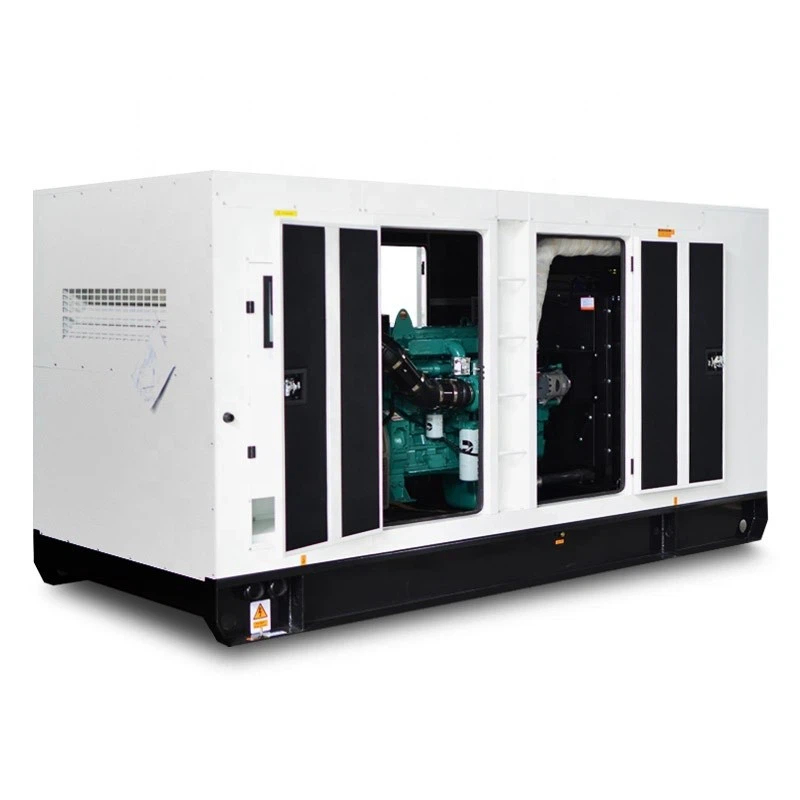

If you’re ready to explore our lineup and find the right diesel generator for your application, we’re here to help. Browse our inventory of Cummins gensets, compare specs, and reach out to our team to discuss your power requirements. We can walk you through the details of insulation classes, help you match the right unit to your load needs, and answer any other questions you have about diesel generators for sale.
References
- "Diesel Generator Stator Insulation: A Guide to Classifications and Applications" – International Electrotechnical Commission (IEC) Publication 60034-1
- "Thermal Aging of Electrical Insulation for Rotating Machines" – IEEE Transactions on Industry Applications, Vol. 56, No. 3, May-June 2020
- Cummins Power Generation – "Standby Generator Specification Manual", 2023 Edition