


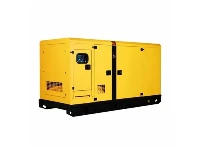
When I first started my generator manufacturing business in China, I’ll admit I was a little unsure about how to navigate the mix of global demand and local policy support. Over the past 12 years, though, I’ve come to see that the Chinese government has built a layered framework of policies that actually help small-to-medium generator manufacturers like me compete both at home and abroad. This isn’t some top-down, one-size-fits-all set of rules—they’re designed to support innovation, sustainability, and market access, all while addressing real gaps in energy infrastructure. Let me walk through what that looks like on the ground, how it’s shaped my business, and what it means for buyers looking for reliable, affordable power solutions.
A lot of the support starts with policy focused on shifting the energy sector toward lower emissions, which is huge for generator makers because so many of our products run on diesel. In 2020, China announced its “Double Carbon” goal—peaking carbon emissions by 2030 and achieving carbon neutrality by 2060—and this has trickled down to specific incentives for manufacturing clean energy equipment. For generator manufacturers, that translates to subsidies for upgrading production lines to build more efficient, lower-emission models, and tax breaks for investing in research and development (R&D). Last year, my team used a 15% tax credit for R&D to design a new line of generators that cut fuel consumption by 12% and reduced nitrogen oxide emissions by 22% compared to standard models. Without that credit, we would have had to delay that project by at least a year, which would have put us at a disadvantage when global demand for eco-friendly backup power started to rise.
Another big piece is the government’s push to strengthen domestic manufacturing supply chains, which directly benefits my business. In recent years, China has prioritized reducing reliance on imported components, especially for critical parts like engine controllers and alternators. The government offers grants and low-interest loans to local component makers to scale up production, and they’ve also set up industry clusters in regions like Zhejiang and Guangdong where generator manufacturers can work with nearby parts suppliers. For us, that meant we no longer had to wait 8 weeks for a key alternator part from a European supplier—now we get it from a local manufacturer in Ningbo in 3 days, for a 10% lower cost. That kind of supply chain stability isn’t just a convenience; it’s allowed us to take on more international orders without risking delays or inflated prices.
Export support is another area where Chinese policies have made a tangible difference for our business. The government runs several trade promotion programs that help small generator manufacturers access global markets, from attending international trade shows (like the Hannover Messe in Germany or the Middle East Energy Show) to getting partial reimbursement for marketing and certification costs. We’ve used these programs to secure the necessary ISO 9001 and CE certifications for our products, which are required to sell in the EU, Southeast Asia, and Africa. Last year, the government reimbursed 40% of the cost for our team to exhibit at the Power-Gen Asia show in Singapore, where we met 12 new distributors and closed enough orders to keep our production line running at full capacity for 6 months. That kind of export support is a game-changer for small manufacturers like us, who don’t have big marketing budgets to reach international buyers.
But it’s not just about big-picture policies—there’s also support for local infrastructure projects, which drive domestic demand for generators. In rural areas of China, the government has been working to expand access to the power grid, but many remote villages still rely on backup power for farming, schools, and small businesses. They’ve set aside funding for rural electrification projects that include purchasing generators from local manufacturers, and we’ve been able to supply a number of these projects with mid-range models that are perfect for off-grid use. We’ve also noticed that as extreme weather events (like heatwaves and typhoons) become more common, local governments are investing more in backup power for hospitals, government buildings, and residential areas. In 2022, a city in Sichuan ordered 50 of our generators to prepare for potential power outages during the summer heat, and that order would not have happened without the government’s infrastructure procurement program.
Of course, like any policy framework, there are challenges to navigate. The focus on clean energy means we have to constantly adapt our products to meet new emissions standards, which requires ongoing R&D investment. But the government actually helps with that—they hold regular workshops and updates on new standards, so we don’t get caught off guard, and they offer training programs for our engineers to learn about new technologies like hybrid generators that run on both diesel and solar. We recently launched a hybrid model, and the government even helped us apply for a green product certification, which makes it easier to sell to buyers who are looking for more sustainable power solutions.


Now, let’s talk about what this means for you as a buyer. As a Chinese generator manufacturer, we’re able to pass on some of the benefits of these policies to our customers in the form of competitive pricing without compromising on quality. For example, our Vidhata 10kVA Generator Price is priced affordably because we have access to local components and streamlined supply chains, and we’ve made that model with the latest emissions standards in mind. For those needing a bit more power, our 8kW Diesel Generator Price reflects the efficiency improvements we’ve made thanks to government R&D support, so you get reliable power without high operating costs.
If you’re looking for a generator for larger residential or small commercial use, our Generac 30kW Diesel Generator is built to handle consistent, heavy loads, and we’ve used government certifications to ensure it meets all international safety and performance standards. For smaller homes or off-grid properties, our 7.5 KVA Generator Diesel is a popular choice because it’s compact, easy to maintain, and priced competitively. And for buyers in countries with strict emissions regulations, our Kirloskar Diesel Generator For Home Use is designed to meet local requirements while still delivering reliable power for everyday needs.
Working in this industry for over a decade has taught me that government support isn’t just a bonus—it’s a core part of what allows small and medium manufacturers like us to thrive. The policies in China are designed to support both local growth and global competitiveness, and that’s why we’re able to offer a range of high-quality generators at prices that work for buyers around the world.
If you’re interested in learning more about our products, discussing your power needs, or getting a custom quote, we’d love to connect with you. We’ve worked with buyers in over 20 countries, from small homeowners to large commercial businesses, and we’re confident we can find the right generator solution for you. Contact us today to start a conversation about how we can meet your power requirements.
References
- National Development and Reform Commission (NDRC) of China. (2022). Double Carbon Action Plan for Energy Sector.
- Ministry of Industry and Information Technology (MIIT) of China. (2023). Support Policies for Small and Medium-sized Manufacturing Enterprises.
- China Council for the Promotion of International Trade (CCPIT). (2023). Annual Report on Chinese Exports of Power Generation Equipment.
- International Energy Agency (IEA). (2022). Global Renewable Energy Policy Update: China.