


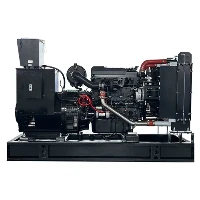
Hey everyone, thanks for tuning in to another post from the team at [our company name]—your go-to diesel generator supplier for residential and small commercial power needs. Today we’re tackling a question we get all the time: can a 30kw diesel generator power multiple air conditioners? If you’re a homeowner or small business owner looking to avoid sweltering heat or downtime when the grid goes out, this is stuff you need to get right. I’ve been selling generators for almost 7 years now, and I’ve seen way too many folks buy the wrong size unit and end up frustrated when it can’t handle their ACs. Let’s break this down simply, no confusing jargon, promise.
First, let’s get the basics out of the way: 30kw is 30,000 watts, right? But here’s the thing most people miss—air conditioners don’t just use 100% of their running wattage all the time. Every AC has two key power numbers: starting wattage (that’s the big spike when the compressor kicks on) and running wattage (the steady power it uses once it’s cooled down and maintaining temperature). If you ignore the starting spike, you’re gonna have a bad time. For example, a typical central AC unit for a 1,500 sq ft home is usually around 3-5 tons. A 3-ton AC has a starting wattage of about 3,500 watts and running wattage around 1,200 watts. A 5-ton one jumps to ~5,000 starting watts and ~1,800 running watts.
Now, a 30kw generator is pretty powerful, but how many ACs can it handle? Let’s do the math with real numbers. If you’ve got three 3-ton ACs, their total starting wattage is 3 x 3,500 = 10,500 watts, and total running is 3 x 1,200 = 3,600 watts. That leaves 19,500 watts of headroom on a 30kw unit. But wait—you also have other stuff powering your generator, right? Refrigerators, lights, a water heater, maybe a washer/dryer. Those add up. Let’s say your other essentials pull around 3,000 running watts. So total running load is 3,600 + 3,000 = 6,600 watts, which is way under 30,000. The real test is the starting spikes. If all three ACs start one after another, their spikes add up to 10,500, plus the other essentials’ startup (refrigerators use a little extra when they kick on, maybe 500 watts) so total startup load is ~11,000 watts. That’s only about a third of a 30kw generator’s capacity. Sounds like a win, right? But wait—what if you have two 5-ton ACs? Their starting wattage is 2 x 5,000 = 10,000, plus essentials startup, so ~10,500. Still manageable. But here’s where people mess up: if you try to run four 3-ton ACs, that’s 14,000 starting watts. Add in other startup loads, and you’re at 17,000, which is still under 30k, but wait—generators have a peak load limit, right? Most diesel generators can handle 10% overload for a short time, but going over that regularly will burn out the engine fast. So four 3-ton ACs would push your peak load too close to the limit, and you might get tripped breakers or damage the unit.
Let’s talk about factors that change things, because not all generators or ACs are the same. First, AC type: window units are way different than central ACs. A 10,000 BTU window AC has a starting wattage of ~1,000 watts and running of ~600 watts. So if you’ve got a bunch of window units, a 30kw generator could handle a lot more—like 15 of them? But wait, again, total load. Also, inverter vs regular ACs: newer inverter models have much lower starting spikes, sometimes almost the same as their running wattage. So if your ACs are inverter type, a 30kw can handle even more units than non-inverter ones.
Then there’s the generator itself. Not all 30kw units are equal. Some are designed for prime power (continuous use) and others for standby (emergency use). Our 30kw standby generators, for example, are built to handle full loads for hours without stress, so that’s a big plus. If you skimp on a cheap generator that’s actually rated at 28kw instead of 30, that’s 2,000 watts less headroom, which can make a huge difference when your ACs start up.
Wait, let’s compare with smaller generators to put this in perspective. A lot of folks ask about smaller units for backup. If you only have one AC, a 6kVA generator is around 4.8kw (since 1kVA = 0.8kw for diesel, roughly). That’s perfect for a single window AC or a small 1.5-ton central AC. You can check out our 6kVA Generator For Sale right here [link text: 6kVA Generator For Sale url:"/household-diesel-generator/6kva-generator-for-sale.html"] if you’re only powering one AC.
If you’ve got a slightly bigger set up, like a small home or office with two ACs, a 5.5kVA generator is about 4.4kw. That’s enough for two small window units or a 2-ton central AC. Our 5.5kVA Generator Price is super competitive for reliable backup, so that’s another option to keep in mind if you don’t need 30kw.
For medium sized spaces, maybe 10kVA is the sweet spot. That’s 8kw, which can handle a 3-ton AC plus a few other essentials, or two 2-ton ACs. We’ve got the Vidhata 10kVA Generator Price here [link text: Vidhata 10kVA Generator Price url:"/household-diesel-generator/vidhata-10kva-generator-price.html"]—it’s one of our best sellers for residential use, super fuel efficient too.
Thermocool Junior is another popular line for smaller needs. The Thermocool Junior Generator Price is great if you’re looking for a compact unit for powering one or two small appliances, maybe a window AC and a fridge. Good for smaller homes or workshops.
And if you’re looking at bigger commercial spaces? A 15kw generator is 15,000 watts, which is halfway to 30kw. That can handle two 3-ton ACs or a 5-ton plus a small window unit, plus all the essential equipment for a small shop. Our 15kw Diesel Generator is a workhorse, you can see it here [link text: 15kw Diesel Generator url:"/household-diesel-generator/15kw-diesel-generator.html"].


Now, let’s get back to the main question: can a 30kw power multiple ACs? The short answer is yes, but only if you calculate the load correctly. You can’t just add up all the running watts—you have to account for the starting spikes, and also any other devices that will be running at the same time. A 30kw generator can typically handle 2-4 central AC units, depending on their size, plus all your home’s essentials. But if you try to cram 5 or more large central AC units, you’re gonna run into issues. Also, if you live in a place with really hot weather, your AC might run longer and use more power, so you need to make sure the generator has enough capacity to handle that constant load.
Another thing to consider: generator sizing isn’t just about watts—it’s about voltage and phase. Most residential generators are single-phase, while commercial can be three-phase. A 30kw single-phase generator is perfect for a home or small office, but if you’re powering a big commercial space with three-phase ACs, you might need to adjust. Our 30kw units are available in both, so just let us know your setup.
I’ve had customers come to me before who bought a 30kw generator and tried to power five 5-ton ACs. They ran into breaker tripping all the time, and even burned out a couple of compressors because the generator was overloaded. It’s a classic case of not checking the starting wattage vs running wattage. Always remember: starting wattage is 2-3 times higher than running wattage for most traditional ACs. Inverter ACs are lower, but still 1.2-1.5 times higher.
If you’re still not sure if a 30kw generator is right for your AC setup, here’s a quick check list:
- List all your ACs, their BTU or tonnage, and if they’re inverter or traditional.
- Calculate each unit’s starting and running wattage.
- Add up the total starting wattage, then add 1000-2000 watts for other essential startup loads. That’s your peak load.
- Add up the total running wattage, plus 1000-2000 watts for other essential running loads. That’s your continuous load.
- Make sure your generator’s rated capacity is at least 20% higher than both your peak and continuous loads. That 20% buffer is super important for avoiding overload, extending generator life, and handling unexpected power surges.
For example, if your peak load is 10,000 watts, a 30kw generator is way more than enough. If your peak load is 22,000 watts, a 30kw gives you an 8,000 watt buffer, which is just enough. If it’s 25,000 watts, you’d need a bigger generator.
Now, why choose a diesel generator for AC power vs gas or propane? Diesel is more fuel efficient, especially for longer runtime. A 30kw diesel generator can run for 8-10 hours at 50% load on a single tank, which is perfect for an extended power outage during a heatwave. Gas generators need more frequent refueling, and propane is often more expensive. Also, diesel engines are built for heavy use, so they last longer when you’re running them regularly for AC power.
But I should also mention: if you only need power for a few hours a week, or just for occasional outages, a smaller generator like the ones I linked earlier might be a better, more cost-effective option. There’s no sense buying a 30kw unit if you only have one AC. That’s why it’s important to be honest with yourself about your needs—don’t overbuy, but don’t underbuy either.
At the end of the day, the best way to make sure you’re picking the right generator is to talk to someone who knows their stuff. We’ve been in the generator game for years, and we’ve helped hundreds of customers pick the perfect unit for their AC and power needs. Whether you’re a homeowner looking to keep your family cool during summer storms, a small business owner wanting to avoid downtime for your customers, or a property manager managing multiple rental units, we can help you figure out if a 30kw generator is the right fit, or if you need something smaller.
Don’t guess when it comes to your power needs. A generator that’s too small will leave you sweltering, and a generator that’s too big is a waste of money. That’s why we offer free consultations—just reach out to our team, tell us about your AC setup and power needs, and we’ll help you pick the right generator. We’re here to make sure you never have to deal with a hot house or office because your power supply can’t keep up.
References:
- U.S. Department of Energy. (2023). Air Conditioner Energy Efficiency and Power Requirements.
- International Electrotechnical Commission. (2022). Diesel Generator Sizing for Residential and Commercial Applications.
- Air-Conditioning, Heating, and Refrigeration Institute. (2021). Standard for Room Air Conditioner Performance.
- [Our Company Name] Product Data Sheets for 6kVA, 5.5kVA, 10kVA, and 30kw Diesel Generators.