


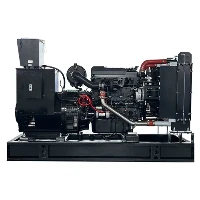
If you’re a factory manager, construction site foreman, or operations lead weighing the option of adding a reliable backup or prime power source, you’ve probably asked: What is the cost of an industrial generator with 100kW power? The answer isn’t a one-size-fits-all number—this category of generator balances technical specs, use case, brand, and long-term value, and as a supplier who’s worked with small manufacturing plants and large distribution centers over the past decade, I can break down what you’ll actually pay, and what factors shape that total.
First, let’s clear up a common point of confusion: 100kW industrial generators are often listed in kVA (kilovolt-amperes) in equipment specs, since power factor is a key detail for industrial use. For most standard industrial applications, the power factor is 0.8, so a 100kW generator equals roughly 125kVA. That brings in a relevant example right here: our Perkins 100kVA model is built for consistent, heavy-duty use, and it’s a top reference for anyone cross-referencing kW and kVA requirements in this power range.
Upfront Purchase Cost: Base and Customization
The first number you’ll see on quotes is the base price of a 100kW industrial generator, which typically lands between $12,000 and $25,000. The gap between those figures comes down to three big factors: fuel type, enclosure, and brand. Diesel generators are the most common for industrial use because of their high energy density and long run times, so most 100kW models fall in the lower end of that range when they’re open-frame, no-frills units. If you need a sound-attenuated enclosure for a noise-sensitive location (like a downtown manufacturing hub or a site near residential areas), you’ll add $1,500 to $4,000 to that cost. Propane and natural gas models are often pricier upfront—usually $15,000 to $28,000—because they require additional fuel storage and conversion components that work with your site’s utility lines.
Brand also plays a big role here. Perkins is a name we’ve relied on for decades because their engines are built to handle continuous load, not just short, emergency runs. For example, if you step up to a larger power range to see how brand scales, 600KW Perkins Engine Generator Set shows the consistency of Perkins’ engineering across power classes—quality that translates directly to the 100kW line. You won’t find the same level of build quality from cheaper, no-name engines, which often have higher failure rates and shorter lifespans, so paying a little more upfront for a reputable brand usually saves money in the long run.
Hidden Costs That Add Up (And How to Avoid Them)
A lot of first-time buyers only focus on the sticker price, but there are several additional costs that make up the total investment. Installation is one of the biggest: industrial generators need proper mounting, electrical wiring to your site’s load panel, fuel line connections, and sometimes permits from local building or fire departments. For a 100kW unit, installation costs usually range from $2,000 to $5,000, depending on how complex your site’s existing power setup is. If you need a transfer switch to automatically switch to generator power during an outage, that’s an extra $1,000 to $3,000—something we always recommend, as manual switches can cause safety hazards and delay critical power restoration.
Another cost to consider is load testing. Before a new generator goes online, it needs to be tested at 100% load to make sure it can handle the full power it’s rated for. We offer load testing as part of our standard service packages, but some suppliers charge extra for it, so that’s a detail to confirm before you commit.
Compare that to smaller units, like our Perkins 30kVA model, which is for light-duty use, and you’ll see that the cost per kW drops as power output increases. A larger unit like a 550KW Diesel Engine Power Generator will have a lower per-kW price, but that doesn’t mean it’s a better fit if you only need 100kW—matching the unit’s size to your actual load is key to not overpaying.
Operating and Maintenance Costs: The Long-Term Price Tag
The upfront cost is only half the story. Over 10 years, the operating and maintenance (O&M) costs of a 100kW industrial generator will add up to 1.5 to 3 times the purchase price, depending on how often you use it. Diesel generators use roughly 0.08 gallons of fuel per kWh, so for a 100kW unit running at full load, that’s 8 gallons per hour. If you’re using it as a backup power source (running a few times a year for a few hours at a time), fuel costs will be minimal. If you’re using it for prime power (running daily to supplement grid power for off-grid sites), you’ll spend a lot more on fuel—so switching to natural gas might make financial sense here, as it’s often cheaper per gallon-equivalent than diesel.
Maintenance is another big O&M cost. For industrial generators, recommended maintenance includes oil and filter changes every 200-250 hours, coolant flushes every 1,000 hours, and regular inspection of belts, hoses, and connections. For a 100kW unit, annual maintenance costs (including parts and labor) usually range from $800 to $1,500. Cutting corners here—like skipping oil changes to save money—can lead to engine damage, which would cost $5,000 or more to repair. That’s a common mistake new generator owners make, and it’s why our team emphasizes proactive maintenance plans to keep your unit running for 15,000+ hours, rather than failing after just 5,000.
Use Case: How What You Need Shapes the Final Cost
The “cost of a 100kW industrial generator” changes entirely based on how you plan to use it. Let’s break down common scenarios:
- Emergency backup power for a small manufacturing plant (10,000 sq ft): You’ll need a diesel, sound-attenuated unit with an automatic transfer switch. Total cost (purchase + installation) will land between $15,000 and $22,000. This is the most common scenario for our Perkins 100kVA customers, as it matches the load needed for 5-10 small assembly lines, HVAC, and lighting.
- Prime power for a remote construction site: You’ll need a more rugged, open-frame unit that’s easy to transport, with a larger fuel tank for long runs between refueling stops. Total cost here is usually $12,000 to $18,000, and many customers pair this with a portable setup, though it’s still built to handle heavy construction loads.
- Backup power for a hospital wing or data center: You’ll need a redundant system (two 100kW units instead of one, for backup to your backup), so total cost jumps to $30,000 to $45,000. In this case, you might cross-reference with larger units like a 440KW Electric Power Generation as part of a scaled system, to ensure you have enough redundant power for critical loads.
Common Misconceptions to Avoid
I’ve worked with dozens of clients who’ve bought 100kW generators only to run into problems, usually because they didn’t account for their specific needs. One common mistake is buying a unit that’s too small: if you miscalculate your peak load, your generator will strain to power all your equipment, leading to higher maintenance and shorter lifespan. Another mistake is skipping scheduled load testing: even a brand-new Perkins generator can have hidden issues if it’s only run at partial load, and load testing ensures it will perform when you need it most.


You might also see cheap, “off-brand” 100kW generators for under $10,000 online, but we don’t recommend them. These units use lower-quality engines that have a failure rate 3x higher than Perkins or other premium brands, and parts can be hard to source, leading to longer downtime when repairs are needed. For an industrial generator, downtime costs far more than the initial savings of a cheap unit—one hour of lost production at a manufacturing plant can cost $10,000 or more, so a reliable unit is a small investment to protect your operations.
Ready to Find the Right 100kW Generator for Your Needs?
The cost of a 100kW industrial generator isn’t just a number—it’s a balance of your short-term budget and long-term reliability. Whether you’re looking for an emergency backup, prime power, or a redundant system for critical loads, our team can help you compare specs, pricing, and maintenance plans to find the right fit for your site. If you want to learn more about the engineering that goes into models like our Perkins 100kVA, or explore how larger power systems scale, we’re here to help you every step of the way. Reach out to our team to discuss your requirements and get a customized quote today.
References
- Perkins Engine Company. Industrial Generator Power Factor Standards.
- International Association of Electrical Inspectors. Industrial Generator Installation Code Requirements.
- U.S. Energy Information Administration. 2024 Industrial Fuel Cost Benchmarks for Diesel and Natural Gas.
- National Fire Protection Association. Generator Safety and Load Testing Guidelines.