

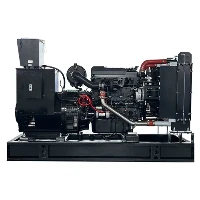

If you’ve ever wondered where the backup power for a hospital’s emergency wing comes from when the grid cuts out, or how a construction site keeps its tools running 24/7 in a remote spot, you’re looking at what generator companies do day to day. I’ve been in this game for nearly a decade, working as a supplier for these firms, and let me tell you—it’s not just selling a box that makes electricity. It’s a whole cycle of matching the right power to a customer’s needs, keeping that equipment running when it counts, and making sure every piece of hardware is up to snuff for any scenario.
First off, generator companies don’t just pick a random model off a shelf. Step one for most is auditing a customer’s power demand. A small café might only need enough to keep the espresso machine and lights on during a blackout—way less than what a data center needs to avoid losing terabytes of data. When a company brings me a request, we start by asking a few key questions: Is this for primary power in a remote area (like a mining camp where there’s no grid at all), or backup power for when the grid fails? How many kilowatts (kW) or kilovolt-amperes (kVA) do their devices actually use? Do they need something that’s easy to move, or something that sits permanently in a concrete pad? For example, a restaurant might go for a compact, portable unit, while a manufacturing plant will need a larger, fixed setup. That’s why we have lines like the [550KW Diesel Engine Power Generator] that fits medium-to-large industrial sites, and the [Perkins 30kVA] which is perfect for smaller businesses or event spaces. We can’t just push a big generator on a small shop—that’s money wasted, and it’ll overwork the machine too.
Once the company locks in the right generator, the next part is sourcing components and building the unit. Most generators run on diesel, natural gas, or propane, but the engine is the heart of it. That’s where brands like Perkins come in—they make engines that are reliable, fuel-efficient, and built to last, which is non-negotiable for generator companies. You’ll see their engines everywhere, from the tiny [Perkins 30kVA] units to the heavy-duty [600KW Perkins Engine Generator Set] used for big power needs. Generator companies don’t usually build engines from scratch; they partner with manufacturers like Perkins because it cuts down on production time and gives customers a trusted name to rely on. We work with these brands to make sure every part—from the alternator that makes electricity to the control panel that lets you start and stop the unit easily—is tested before it leaves the factory. No cutting corners here: a generator that breaks during a storm is way worse than one that’s overkill for a job.
After building, it’s time to get the generator to the customer and set it up. That’s not just dropping it in a parking lot, either. For backup generators, companies need to install them in a well-ventilated space, connect them to the building’s electrical system, and test them to make sure they switch on automatically when the power goes out. For remote primary power, like a construction site in the desert, we have to handle logistics—getting the unit there on a flatbed truck, setting up fuel tanks, and making sure it can handle extreme heat or dust. I’ve seen [Perkins 100kVA] units hauled to music festivals to power stages, and large [550KW Diesel Engine Power Generator] setups installed at hospitals where every second of downtime is a risk. This part is crucial because even the best generator is useless if it’s not installed right.


Then comes the ongoing part: maintenance and support. Generator companies don’t just sell a unit and disappear. A lot of customers forget to test their generator until there’s a power outage, which is when they find out the fuel line is clogged or the battery is dead. So companies offer regular maintenance plans—monthly check-ups, oil changes, filter replacements, and load tests to make sure the generator can handle its full power when needed. For customers who use generators daily (like a business in an area with frequent grid outages), maintenance is non-negotiable. It’s way cheaper to fix a small issue now than to replace a whole unit later. That’s why we also provide parts and service for all the generators we supply, whether it’s a small [Perkins 30kVA] or a big industrial model.
Another big part of the operation is staying up to date with regulations and tech. Governments around the world have rules about emissions for generators, especially diesel models. Generator companies have to make sure their products meet those rules—no one wants a unit that gets shut down by environmental inspectors. We’ve seen a lot of changes in recent years, with more focus on clean, low-emission engines, which is why we work with Perkins to offer models that meet the latest standards. Also, many customers now want generators that connect to their phones or building management systems, so they can monitor fuel levels or start the unit remotely. Generator companies have to adapt to that, adding smart features to their products instead of sticking to old, manual setups.
Let’s talk about customer service, too. This is what sets good generator companies apart from the rest. I’ve seen a customer panic at 2 a.m. because their hospital’s generator failed during a storm—fast response is everything. Companies need to have emergency technicians on call 24/7, to fix a broken generator before it causes real problems. That means stocking parts for popular models like [Perkins Generator] units so a tech can grab what they need and be on site in a few hours. No one has time to wait for a part when the refrigeration for a grocery store’s inventory is about to shut down.
Wait, there’s also the sales and financing side, right? Not every customer can pay for a large generator upfront. So generator companies work with financing partners to offer payment plans, leases, or even rent-to-own options. For a small business that only needs a generator for a few months during peak season, renting a [Perkins 30kVA] makes way more sense than buying. That’s a big part of the business model—meeting customers where they are, whether they’re a big corporation buying a permanent setup or a small contractor needing a temporary unit.
I’ve learned a lot in this role, and one thing that stands out is that generator companies aren’t just in the power business—they’re in the reliability business. Every unit we sell is supposed to be a safety net, whether that’s for a family’s home, a school’s classrooms, or a factory that employs hundreds of people. That’s why we’re so careful about every step: auditing the customer’s needs, sourcing top engines from brands like Perkins, installing correctly, and keeping maintenance easy.
If you’re a business owner, facilities manager, or anyone who might need a generator for backup or primary power, the key is to work with a company that doesn’t just sell you a unit—they support it. We can walk you through figuring out how much power you actually need, show you models like the [550KW Diesel Engine Power Generator] or [Perkins 100kVA] that fit your space and budget, and help with installation and maintenance. No one should get stuck with a generator that’s too big, too small, or doesn’t work when they need it most.
Ready to learn more or start a conversation about which generator is right for you? Reach out to our team to discuss your power needs, browse our full line of Perkins and diesel generator models, and get tailored guidance for your business.
References:
- Perkins Engines Company Limited. (2024). Diesel Generator Solutions for Commercial and Industrial Applications.
- International Organization for Standardization. (2023). Standard for Stationary Diesel Generator Emissions and Performance.
- U.S. Energy Information Administration. (2024). Backup Power Generator Market Trends and Customer Requirements.
- Diesel Technology Forum. (2023). Fuel-Efficient Diesel Generator Models for Reliable Power Supply.