

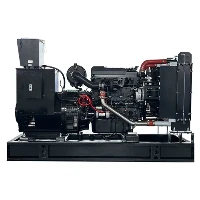

If you’re in the market for a backup or primary power source for your worksite, farm, small business, or even home, you’ve probably tangled with the diesel vs. gasoline generator question. As a generator supply provider that’s been in the game for over a decade, I’ve fielded this question a hundred times—usually from folks stressed about choosing something that won’t break the bank, whether for a weekend job, a remote mine, or keeping the lights on when the grid goes down. Let’s cut through the marketing hype and get into what actually makes one more cost-effective than the other, because “cost-effective” isn’t just about upfront price—it’s fuel, maintenance, longevity, and what you actually need to power.
First, let’s get the basics straight: diesel generators run on diesel fuel, gasoline on unleaded (sometimes with ethanol these days). The first big cost hit most people notice is the upfront sticker price. A small portable gasoline generator (like the 2,000-watt ones you grab for tailgates or a backyard outage) is way cheaper than a comparable diesel model—we’re talking a few hundred vs. a couple thousand bucks. But if you’re powering something bigger? Wait, that story flips fast. For industrial or high-load setups, diesel generators have a much higher baseline cost, but that’s where you start seeing ROI that makes gasoline look like a no-go.
Let’s talk fuel, because that’s the biggest ongoing expense for any generator. Diesel has a higher energy density than gasoline—roughly 10% more energy per gallon, meaning you get more power out of every liter. And modern diesel engines are way more fuel-efficient than gas counterparts. For example, a 100kW diesel generator might use about 8 gallons of fuel per hour under full load, while a similar gas model would burn 12 gallons. If you’re running that generator 8 hours a day, 5 days a week for a month, that’s a huge difference in fuel costs. That efficiency gets even wilder when you get into higher-voltage models. If you’re powering a mine site or a commercial facility, you’d want to check out our Mining Diesel Generator units, built for constant heavy loads and optimized for that fuel efficiency to keep remote sites running without constant fuel deliveries. We also have High Voltage Diesel Generator lines, including 6.6kv Diesel Genset and 11kv Diesel Generator models, which are designed for high-demand industrial use and deliver way better fuel economy than gas generators at that power level.
But wait—gas has a couple of quirks that hurt long-term costs too. Gasoline breaks down fast, especially if you leave it sitting in a generator for more than a month. Ethanol-blended gas (which is most of what you get at the pump these days) goes bad in as little as 30 days, and that gunk can clog fuel lines, carburetors, and injectors. I’ve seen so many customers who bought a cheap gas generator for emergency use, only to pull it out after a blackout and have to pay $200+ to unclog the fuel system because they didn’t run it for six months and used old gas. Diesel, on the other hand, is way more stable. You can store it properly (in a sealed tank, away from heat) for up to a year, even longer with additives, which is a huge plus if you need a generator for backup power that you only use occasionally. No more dumping old gas and buying new every few months.
Next up: maintenance. This is where diesel generators really shine, even if the upfront parts cost a bit more. Diesel engines are built tougher—they have thicker cylinders, sturdier components, and run at lower RPMs than gas engines. That means less wear and tear over time. A gas generator might need a new oil change every 50-100 hours, a tune-up every 200 hours, and carburetor cleaning almost every time you use it after storage. A diesel generator? Oil changes are often every 200-500 hours, tune-ups are way less frequent, and there’s no carburetor to clean (they use fuel injectors now, which are more reliable and easier to service when needed). Over a 10-year lifespan, that adds up to way less maintenance cash for diesel, even if the initial parts are a bit pricier.
Wait, but let’s not ignore the downsides of diesel. They’re louder than gas models, no question. A portable diesel generator will rattle your windows from a block away, whereas a small gas model can be pretty quiet for tailgates. They also require a bit more ventilation—diesel fumes aren’t as bad as old rumors make them out to be, but they still need proper airflow, so you can’t stick a diesel generator in a tiny enclosed space like you can a small gas one. And for super light, occasional use? Like if you just need a generator for a weekend camping trip once a year? The upfront cost of a diesel model might never pay itself back in fuel and maintenance savings. A $300 gas generator is perfect for that—no need to drop $1,500 on a diesel you’ll use 10 days a year.
The sweet spot for diesel vs. gasoline is all about load and usage. Let’s break it down simply: if your generator is going to run less than 50 hours a year, for light loads (like a small home outage, a tiny worksite tool), gas is probably more cost-effective upfront, even with the maintenance and fuel costs. But if you’re going to run it more than 100 hours a year, especially on high loads (like powering a whole office, a farm irrigation system, a mine site), diesel is the clear winner. The better fuel efficiency, lower long-term maintenance, and longer lifespan (diesel generators often last 15-20 years vs. 8-10 for gas) will save you way more cash over time than the higher upfront price.

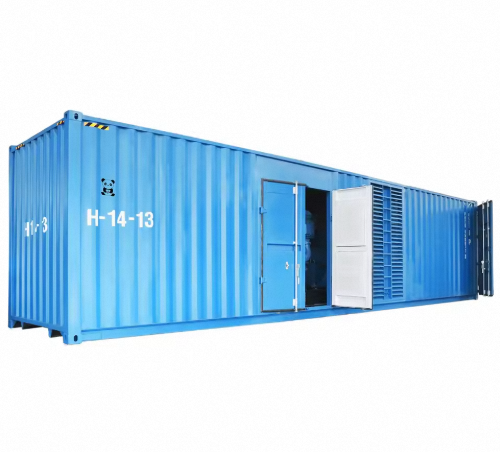
I’ve seen this play out with clients a lot. Last year, a small construction company came to me wanting generators for two new job sites. They initially went for gas models because they were cheaper, but after three months, they were complaining about spending $1,200 a month on fuel and $300 a month on maintenance for clogging carburetors. They traded them in for mid-range diesel units, and their monthly costs dropped by almost half. Another client, a remote mining operation, needed a power source that could run 24/7 for months at a time. We supplied them with our Mining Diesel Generator models, and their fuel bills were 30% lower than the gas alternatives they’d used before, plus the machines needed almost no maintenance during their 6-month deployment. When they needed to upgrade to higher-capacity units later, they went straight for our High Voltage Diesel Generator line, specifically the 6.6kv Diesel Genset and 11kv Diesel Generator models, because they could handle their heavy load without burning extra fuel.
Another thing to consider: resale value. Diesel generators hold their value way better than gas models. If you decide to upgrade or sell your generator after a few years, you’ll get way more money back for a used diesel unit than a used gas one. That’s another piece of the cost puzzle that a lot of people miss.
Let’s do a quick real-world example to make this concrete. Say you need a generator for a small shop that runs 8 hours a day, 5 days a week, so 200 hours a month. A gas generator that can handle 5kW costs $800 upfront. It uses 5 gallons an hour, at $3.50 a gallon, so that’s $17.50 an hour, $140 a day, $700 a week, $2,800 a month? Wait no, wait—wait, 200 hours a month, 5 gallons an hour, that’s 1,000 gallons a month, times $3.50 is $3,500 a month. Maintenance adds another $200 a month, total $3,700 a month, upfront $800.
A comparable diesel 5kW generator costs $2,500 upfront. It uses 3 gallons an hour, so 600 gallons a month, times $3.70 a gallon (diesel is usually a bit more per gallon these days, but let’s check that). Wait, $3.70 x 600 = $2,220 a month. Maintenance is $50 a month, total $2,270 a month. Even with diesel being 20 cents more per gallon, after just one month, the diesel is already cheaper overall, and that gap only grows every month. After a year, gas would’ve cost $44,400, diesel $27,240—savings of over $17,000 in the first year. That’s a no-brainer, right?
But again, that example is for regular, high-load use. If you only run that generator 10 hours a month, gas would cost $175 fuel, plus $10 maintenance, total $185. Diesel would cost $111 fuel, plus $5 maintenance, total $116—wait, even then? Oh, right, because even low usage, the efficiency helps. The only time gas makes sense is when you’re running it super infrequently, like less than 10 hours a quarter, because then you avoid the upfront cost of the diesel model.
Also, let’s talk about availability. Gas is everywhere—you can get it at any gas station, even in small towns. Diesel is also available, but not at every tiny gas station, especially in remote areas. That’s a consideration if you’re powering a worksite way out in the boonies. But for most industrial or commercial sites, diesel is easy to get, and you can even arrange regular deliveries so you don’t have to worry about running out.
At the end of the day, the “more cost-effective” answer depends on how you’re going to use the generator. If it’s for occasional, light use, gas might be the way to go. If it’s for regular, heavy loads—like powering a business, a farm, a remote site—diesel is the clear winner. We’ve seen clients of all sizes make that call, and the ones who go diesel for long-term use almost always say they wish they’d skipped the gas models entirely.
If you’re still not sure which one fits your needs, we’re here to help. We’ve been supplying generators for all kinds of projects, from home backup to large industrial mining operations, and we can walk you through the numbers, show you our lines like our Mining Diesel Generator, High Voltage Diesel Generator, 6.6kv Diesel Genset, and 11kv Diesel Generator, to make sure you get the right unit for your budget and usage. Whether you need something small for a weekend job or a high-capacity model for constant industrial use, we can help you figure out the best, most cost-effective pick without the sales fluff. Reach out to our team to chat through your project and get a tailored recommendation.
References
- U.S. Energy Information Administration. (2024). Gasoline and Diesel Fuel Update.
- Generator Industry Association. (2023). Residential and Commercial Generator Cost and Efficiency Report.
- International Organization for Standardization. (2022). Standard for Diesel and Gasoline Generator Performance Ratings.