


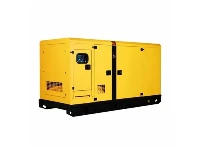
If you’ve ever relied on a generator to keep operations running during a power outage, you know it’s far more than a box that makes noise and spits out electricity. As a generator supply expert who’s spent the last decade helping businesses, industrial sites, and residential users navigate power solutions, I’ve seen how a standard unit can fall flat without the right accessories. Whether you’re running a high-voltage setup for a manufacturing plant or a rugged unit for a remote mining site, the right add-ons don’t just boost performance—they extend lifespan, improve safety, and save you from costly downtime. Let’s break down the most essential optional accessories every generator owner should consider, and how they fit into your specific power needs.
First, let’s start with accessories tailored to high-voltage generators, since so many of our clients rely on these for large-scale, mission-critical operations. High voltage sets come with unique demands that standard units can’t address. One of the most popular add-ons for these is an automatic voltage regulator (AVR). Wait, you might be thinking—aren’t AVRs standard? For basic setups, yes, but for high-voltage applications, a premium digital AVR is a game-changer. Unlike analog versions, which can struggle with sudden load fluctuations (think a factory kicking on a 10-ton machine mid-outage), a digital AVR adjusts voltage in milliseconds, preventing damage to sensitive equipment like PLCs, sensors, and motor drives. I’ve had a client in the petrochemical industry tell me that before upgrading to a digital AVR, they’d lose $20,000 per hour when a voltage spike fried their control system—now that’s a risk they don’t take anymore.
Another key high-voltage accessory is a load bank. A lot of people don’t realize that generators need regular “exercise” to stay reliable, especially if they’re only used for emergency backup. A load bank simulates a full electrical load without having to connect to actual equipment, letting you test your generator’s performance during routine maintenance. We often recommend this for clients who use High Voltage Diesel Generator for 24/7 operations, like data centers or hospitals, because it uncovers hidden issues before they cause an outage. For example, a client in the healthcare sector installed a load bank and found that their generator was only running at 60% capacity during tests, which meant a sudden peak load would have left them in the dark. After a quick tune-up, they’re now compliant with NFPA 110 standards for emergency power.
If you’re dealing with even higher voltages, like industrial facilities that require 11kv setups, there are accessories specific to that range. A 11kv system needs specialized circuit protection to handle the higher current, and that’s where a medium-voltage circuit breaker comes in. Unlike low-voltage breakers, which can’t interrupt the high fault current in an 11kv setup, a medium-voltage breaker provides reliable overcurrent and short-circuit protection, keeping your generator and connected equipment safe. We also work with clients who need cable management solutions for these high-voltage units, since improper cable routing can lead to voltage drop and overheating. Heavy-duty, shielded power cables are a must here—they’re built to handle the insulation requirements of high-voltage systems, reducing the risk of electrical fires and improving efficiency. For anyone sourcing 11kv equipment, we’re happy to walk you through the specs of our units and the accessories that pair best, so don’t hesitate to reach out.
Shifting to heavy-duty, remote applications—mining sites are a perfect example of how rugged your generator setup needs to be. Mining operations run 24/7 in harsh environments: dust, extreme temperatures, and rough terrain are just the start. That’s why accessories for mining diesel generators are designed to withstand these conditions. One of the most critical add-ons here is a heavy-duty air filter system. Standard air filters can clog quickly with coal dust, rock particles, and debris, leading to engine wear and reduced fuel efficiency. A two-stage air filter with a pre-cleaner removes 95% of large particles before they reach the primary filter, cutting maintenance time by half. A mining client in Western Canada told me that since installing these filters, their generator’s oil change intervals went from every 200 hours to every 500 hours, saving them thousands in maintenance costs each year.
Another mining-specific accessory is a cold climate kit. Many mining sites operate in sub-zero temperatures, where standard engine oil can thicken, and batteries can lose charge quickly. A cold climate kit includes a block heater for the engine, a battery heater, and a cold-start aid system that lets the generator fire up in temperatures as low as -40°F. Without this, a winter outage could halt production for days, costing millions in lost revenue. I’ve seen clients try to “make do” without these kits, only to end up with a frozen engine at 2 a.m. on a blizzard—trust me, the investment in a cold climate kit pays for itself in one season.


Now, let’s talk about gensets that run on lower medium voltages, like 6.6kv. These are common in applications like commercial buildings, airports, and large commercial farms. For 6.6kv diesel genset owners, there are accessories that focus on efficiency and ease of use. A transfer switch is non-negotiable here, but not just any transfer switch—an automatic transfer switch (ATS) that switches between utility power and generator power in less than 10 seconds. For businesses with sensitive equipment, even a 30-second delay can cause servers to crash or refrigerated goods to spoil. A smart ATS also lets you monitor power status remotely, so you can get alerts if your generator kicks on during an outage, even when you’re off-site. That’s a big one for farm owners who might be miles away from their property during a storm.
Another useful accessory for 6.6kv setups is a fuel polishing system. If you store diesel for your generator, it can get contaminated with water, bacteria, and sediment over time—especially if storage tanks are left unused for long periods. A fuel polishing system circulates fuel through filters and water separators, removing these contaminants and ensuring your generator runs clean. We had a client in a large retail chain who neglected fuel polishing, and when a hurricane knocked out power, their generator wouldn’t start because the fuel was full of bacteria. They lost $500,000 in spoiled inventory that day, and now they schedule quarterly fuel polishing as part of their maintenance plan. It’s a small investment that prevents a huge headache.
Beyond voltage-specific accessories, there are universal accessories that benefit almost every generator owner, no matter the setup. Let’s start with noise reduction. Generators can be loud—some units produce 90 decibels at 23 feet, which is as loud as a chainsaw. If your generator is near residential areas, office spaces, or worker quarters, a sound-attenuated enclosure is essential. These enclosures are lined with acoustic foam and have ventilation systems that keep the generator cool while reducing noise by 20-30 decibels. A construction client we work with moved their generator near a housing development and was facing complaints until they installed an enclosure—now the noise is barely noticeable, and they avoided fines from local authorities.
Battery maintenance is another universal accessory that’s often overlooked. Deep-cycle generator batteries need regular charging, and a battery charger maintainer keeps them topped up when the generator isn’t in use. Without this, batteries can degrade quickly, especially in extreme temperatures. We recommend a smart maintainer that adjusts the charging rate based on battery condition, extending battery life by up to 50%. I’ve seen clients replace batteries every year because they skipped this step, while others have batteries that last 5+ years with a maintainer— that’s a clear cost difference.
Last but not least, remote monitoring systems. In today’s connected world, you don’t have to be on-site to check your generator’s status. A remote monitoring accessory lets you track fuel levels, run hours, voltage output, and fault codes from your phone or computer. Some systems even send automatic alerts if there’s a problem, so you can troubleshoot before it becomes a failure. A logistics client with multiple generator units at different warehouses uses this system to check all their setups in one dashboard, reducing maintenance time and catching issues that would have otherwise gone unnoticed. It’s especially valuable for businesses with multiple locations or remote sites.
At the end of the day, choosing generator accessories isn’t just about adding parts—it’s about matching them to your specific needs. If you’re a mining operator in a cold climate, you don’t need a high-voltage circuit breaker that you’ll never use, but you do need a heavy-duty air filter and cold-start kit. If you’re running a hospital, a load bank and digital AVR are non-negotiable to protect critical equipment. Our team works with clients to assess their operations, from the smallest residential backup generators to the largest 11kv Diesel Generator, and recommends the accessories that will make the biggest impact on reliability and cost savings.
If you’re looking to upgrade your generator setup, need help choosing the right accessories, or have questions about compatibility, we’re here to help. Whether you’re sourcing a high-voltage system, a mining-specific unit, or a 6.6kv solution, we can guide you through the options that fit your budget and operational needs. Don’t let an incomplete generator setup leave you vulnerable to downtime—reach out today to discuss your requirements and find the perfect accessories to maximize your generator’s performance.
References
- National Fire Protection Association. (2020). NFPA 110: Standard for Emergency and Standby Power Systems.
- Mining Association of Canada. (2022). Off-Grid Power Solutions for Remote Mining Operations.
- International Electrotechnical Commission. (2021). IEC 60034: Rotating Electrical Machines.
- U.S. Department of Energy. (2023). Fuel Storage and Maintenance Guidelines for Diesel Generators.