


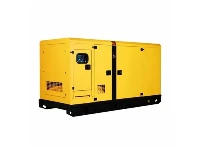
If you’ve ever shopped for a backup power source—whether for a home during extreme weather, a construction site off-grid, or a small business requiring continuous operations—you’ve probably wondered how generator set manufacturers keep up with demand. As a supplier in this industry, I get this question constantly from customers, distributors, and even people just curious about how these critical pieces of equipment are made. The short answer is that production capacity varies widely, depending on the manufacturer’s size, specialization, and target market. But to truly understand what “typical” capacity looks like, you have to look at the full spectrum of generator set sizes, from compact portable models to heavy-duty industrial units, and how manufacturers scale their operations to meet diverse needs.
Let’s start with the smallest end of the market: portable and residential generator sets, which power everything from a fridge during a power outage to a job site’s power tools for a weekend project. These units, usually ranging from 1kW to 20kW, are high-volume, low-margin products for many manufacturers. A mid-sized manufacturer focused solely on residential and light-commercial models might produce anywhere from 50 to 150 units per day, depending on the model mix. For example, popular models like the 15kw Diesel Generator are designed for quick assembly, with modular parts that cut down build time. Each unit takes about 4 to 6 hours to assemble, test, and package, so a 100-worker line can turn out around 120 of these 15kW generators in a single shift. It’s worth noting that these numbers shift seasonally: demand for portable generators spikes during hurricane season in the U.S., or monsoon season in parts of Asia, so many manufacturers ramp up production to 200+ units per week during peak months, even if their average daily production is lower.
Moving up to mid-sized units, which cover 20kW to 500kW, you start to see smaller batch production rather than high-volume assembly. These generators, often used for small businesses, farm operations, or remote construction sites, require more customization and stricter quality checks than their smaller counterparts. A manufacturer specializing in mid-range industrial generators might produce 10 to 30 units per day, again depending on the model. Take the 30kw Diesel Generator, for instance: it’s a step up in power, with a more robust engine and a larger alternator, so assembly time per unit jumps to 8 to 12 hours. Manufacturers here also work with custom configurations—some customers need specific fuel types, noise reduction for residential areas, or compatibility with smart home power management systems—so production lines are designed to handle varied builds rather than one single model. That flexibility means their daily output is lower than residential lines, but each unit commands a higher price point, which balances the slower production pace.
The next category is heavy-duty industrial generator sets, from 500kW up to 2MW or more, used for data centers, hospitals, mining operations, and large manufacturing plants. These are low-volume, high-complexity products, with production cycles that can span weeks or even months. A large, specialized industrial generator manufacturer might produce 1 to 5 of these units per week, and sometimes just 1 per month for extremely large projects like a 1000kW unit for a regional hospital. The 1000kw Diesel Generator falls into this range: it requires heavy lifting equipment for engine and alternator installation, extensive testing for load capacity and emissions compliance, and integration with transfer switches that meet strict commercial safety standards. Unlike smaller models, these large generators are rarely assembled in a mass-production line; instead, they’re built in dedicated bays by small teams of technicians who specialize in high-power units. This custom approach ensures each generator meets the exact needs of its end user, which is why production capacity here is measured in units per month, not per day.
Of course, not all manufacturers fit these molds. Some multi-line companies produce everything from portable generators for camping to 2MW industrial units, so their capacity is a mix of high-volume small models and low-volume large units. A company of this type might have two separate production facilities: one for residential generators, turning out 1,000 to 2,000 portable units per week, and another for industrial units, with the capacity to produce 50 to 100 mid-sized and heavy-duty units per month. That’s the model many of our team follows: we have a line for the 6.5 Generator (a compact, fuel-efficient portable model perfect for tailgates or small farm equipment) and a separate bay for larger commercial units, so we can balance demand for both seasonal small models and year-round industrial orders.
It’s also important to distinguish between “theoretical” production capacity and “actual” capacity. Theoretical capacity is the maximum number of units a manufacturer could build if every worker and machine is running at full speed with no delays, while actual capacity accounts for downtime—for maintenance, material shortages, quality inspections, and custom changes. For example, a manufacturer might list its theoretical capacity for the Dg 15kva Price as 180 units per day, but in reality, supply chain delays for diesel engines or alternators can cut that actual output by 10 to 20 percent. That’s why experienced buyers don’t just look at advertised capacity; they ask about a manufacturer’s supply chain reliability and ability to adapt to lead times. For us, we prioritize stocking core components like engines and alternators to avoid those delays, so our actual capacity stays close to our theoretical targets, even during busy periods.
Another factor that impacts production capacity is emissions regulations. Many regions, including the U.S. EPA and EU’s Stage V standards, require generator sets to meet strict emissions limits, which means manufacturers have to invest in new technology—like diesel particulate filters and selective catalytic reduction systems—for their models. These add time to the production process, as technicians have to install and test these systems, so capacity for models that meet the latest standards might be lower than older, non-compliant units. For example, a manufacturer might have had the capacity to produce 120 non-compliant 15kW generators per day, but after redesigning the unit to meet emissions rules, that daily output drops to 80 to 90 units, at least until the production line is fully optimized for the new design. That’s why staying up-to-date with regulatory changes is as important for production capacity as having the right equipment and workforce.
Workforce skill also plays a big role. Assembling a 1000kW generator isn’t the same as putting together a portable 6.5kW model. The technicians who build large industrial generators need specialized training in high-voltage wiring, engine calibration, and safety protocols for heavy equipment. A manufacturer with a well-trained, experienced workforce will have higher actual capacity than one with a new, less skilled team, even if both have the same number of assembly lines. For us, we invest heavily in ongoing training—our technicians spend 40 hours each year learning about new generator models and regulatory updates—to keep our production process efficient and our output consistent, regardless of the model mix.
For customers, understanding a manufacturer’s production capacity isn’t just about knowing how fast they can get a generator to you. It’s also about evaluating reliability. If a customer needs a backup generator for a hospital with a 2-week deadline, they need a manufacturer that can scale up production temporarily, not one that’s already running at full capacity with no flexibility. Manufacturers that focus on specialized products, like only heavy-duty industrial units, might have less flexibility for quick orders, while those with a mix of product lines can shift resources to meet urgent requests. That’s why when we work with a new client, we don’t just talk about how many units we can produce per day—we also discuss lead times, custom options, and how we’ll adjust our production to fit their timeline.
At the end of the day, there’s no one-size-fits-all answer to “what’s the typical production capacity of generator set manufacturers.” It ranges from 50 portable units per day for small residential brands, to 120 mid-sized units per day for mid-market manufacturers, down to 1 heavy-duty unit per month for specialized industrial producers. What matters most is aligning a manufacturer’s capacity with your specific needs: whether you need a quick delivery of a small portable generator, a custom mid-sized unit for a small business, or a heavy-duty industrial generator for a large facility.
If you’re in the market for a generator set and want to discuss production capacity, lead times, or specific models for your application, we’re here to help.


References:
- International Energy Agency. (2022). Power Grid Resilience: The Role of Backup Generators.
- National Electrical Manufacturers Association. (2023). Generator Set Manufacturing and Production Standards.
- U.S. Environmental Protection Agency. (2022). Emissions Standards for Stationary Generator Sets.
- Portable Power Association. (2021). Residential Generator Production Trends and Capacity.